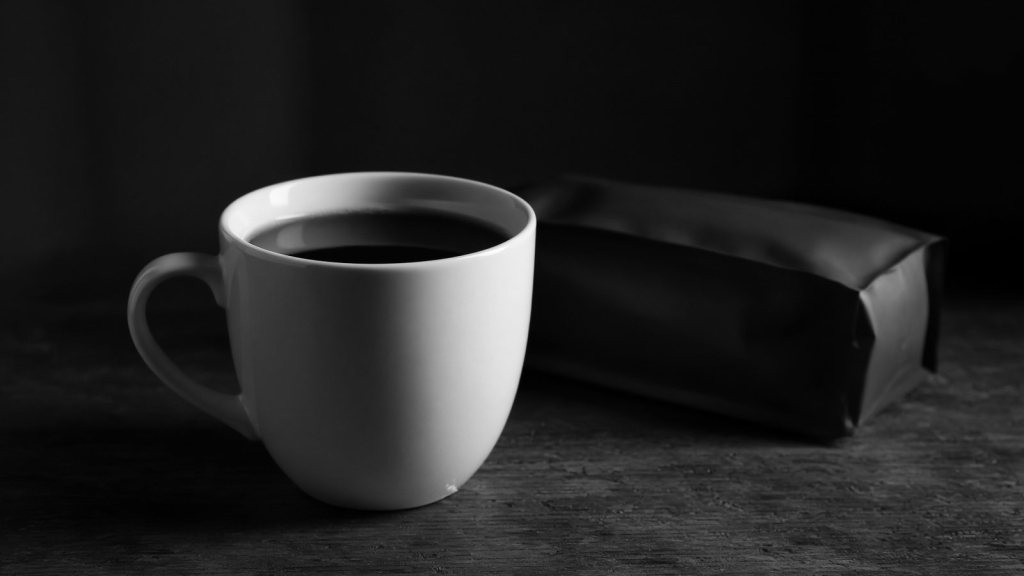
Here is the problem with tasting notes. You read “blackcurrant” on a bag, you drink the coffee, and you taste blackcurrant. That is not your palate working. That is suggestion.
So cover the label. Pour the cup, put the bag in a cupboard, and work through what follows. It takes about a week of mornings before you stop needing the list.
Smell it before you drink it
Most of what you think is taste is smell. Get your nose over the cup while it is still too hot to drink and just breathe. Do not try to name anything yet.
Ask one question. Does this smell like fruit, or does it smell like cooking? Fruit means the roast stopped early enough to leave the bean’s own character in place. Cooking, meaning toast, caramel, chocolate, smoke, means the roast went further and the flavours of roasting are doing the talking.
Neither is wrong. But you have just learned more about the coffee than the front of the bag was ever going to tell you.
Take a bigger sip than feels polite
A cautious sip touches the front of your tongue and tells you almost nothing. You want enough in your mouth to coat the whole thing. Professionals slurp for this reason and they look ridiculous doing it, which is why they do it in private.
Wait for it to cool, too. Coffee at pouring temperature is mostly heat. The interesting part shows up around the point where you stop wanting to blow on it, and the best coffees keep getting better as they cool. A coffee that falls apart at room temperature was thin all along, and the heat was hiding it.
Four things to notice, in order
Acidity. Not sourness. The sensation at the sides of your tongue that makes your mouth water, the same thing a green apple does. Good acidity feels bright and makes you want another sip. Bad acidity feels sharp and makes you stop. If it reminds you of lemon or apple, that is acidity working. If it reminds you of vinegar, something went wrong.
Sweetness. Coffee has no sugar in it, so what you are looking for is the impression of sweetness. Ripe fruit rather than a boiled sweet. This is the single most reliable marker of quality across every origin and every roast level, and it is the one nobody thinks to check. Underripe cherries make coffee that tastes savoury and hollow no matter how carefully it was roasted.
Body. How heavy it feels. Skimmed milk at one end, cream at the other. Body is texture, not strength, and the two get confused constantly. A light-bodied coffee can be intensely flavoured. A heavy one can taste of nothing.
Finish. Swallow, then wait ten seconds. What is still there? Good coffee leaves something behind that you would happily taste again. Poor coffee leaves either nothing at all or a dryness at the back of your throat like over-stewed tea.
Four faults worth recognising
- Stale. Flat, papery, like the smell of a cupboard. No aroma to speak of. This is age, and it is the most common fault in supermarket coffee by an enormous margin. Nothing you do at the brewer will fix it.
- Baked. Tastes vaguely of cereal and nothing else. Happens when the roast was too slow through the middle. Distinct from stale because the aroma is present, it is just boring.
- Ashy. Actual burnt notes, a dry grip at the back of the mouth. The roast went too far. Some people like this and buy it deliberately, which is fine, but know that you are tasting the roaster rather than the coffee.
- Fermented past the point of fun. Boozy, sharp, a little like nail varnish. Some natural processed coffees flirt with this on purpose and it can be great. When it tips over, you will know, because it stops tasting like fruit and starts tasting like something going off.
Before you blame the coffee
Most bad cups are not bad beans. Check these first, in this order.
Your water. A cup is about ninety-eight per cent water. If yours is heavily softened, heavily chlorinated, or distilled, the coffee will taste flat or strange no matter what you paid. Try a cheap bottled water once, purely as a test. People are routinely shocked.
Your grinder. Blade grinders produce dust and boulders at the same time. The dust over-extracts and turns bitter while the boulders under-extract and turn sour, and you drink both at once. A modest burr grinder improves a cheap coffee more than an expensive coffee improves a blade grinder.
How long the bag has been open. Ground coffee is noticeably worse after a week. Whole beans hold for three or four. Buy less, more often.
Then read the bag
Once you have written down what you actually tasted, go and look. Sometimes you will match the notes exactly and feel clever. Sometimes you will have tasted something completely different, and that is not a failure. Tasting notes are one person’s shorthand, often written by someone who never tasted the batch you bought.
The point is not to agree with the bag. The point is to stop needing it.
 Grounds for Treason
Leave a comment